
The Amazon
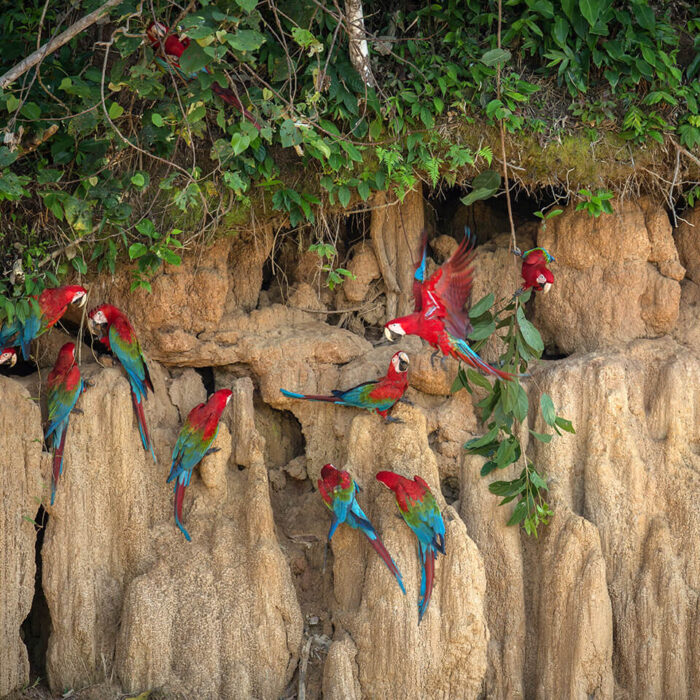
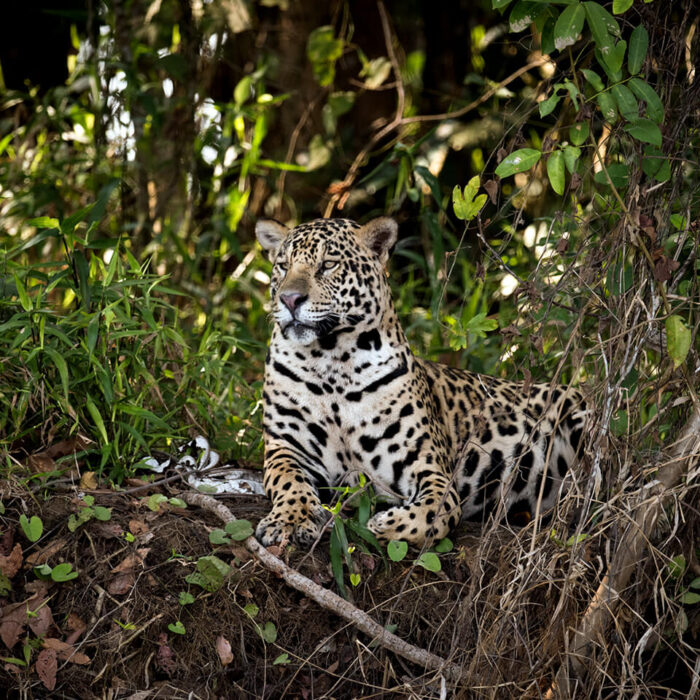
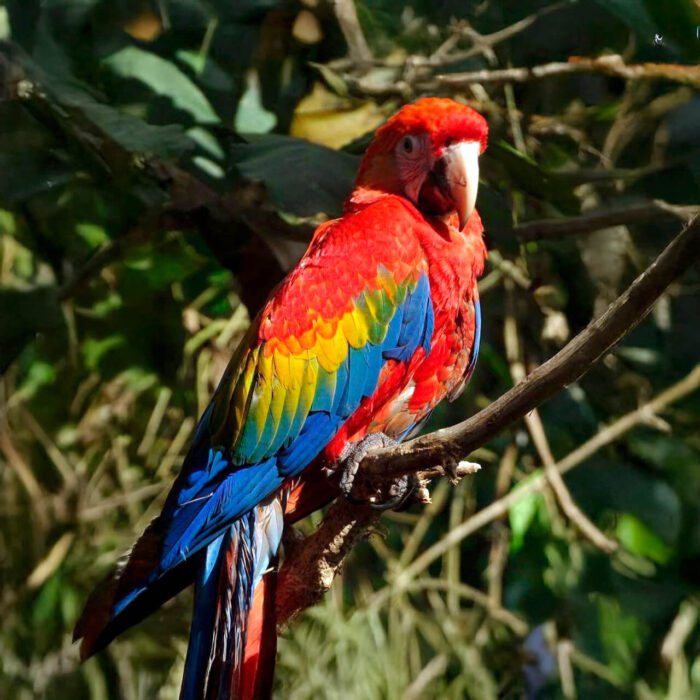
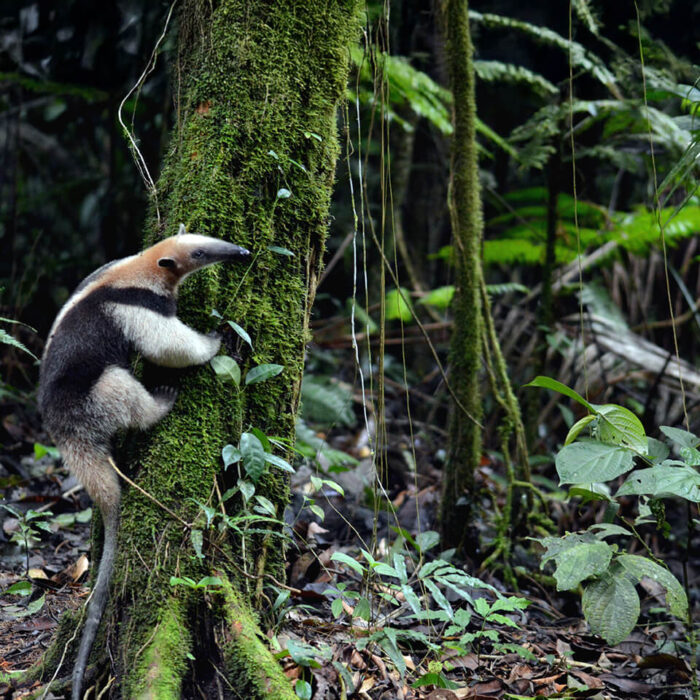
The Amazon is one of the most extraordinary natural systems on Earth — a living web where water, forest, and life are inseparably linked. Stretching across nine countries, it shelters a third of the planet’s species and shapes the global climate. To explore it is to witness the pulse of evolution itself.
Two hundred million years ago, long before humans were even a gleam in the eye of some pink-nosed tree shrew, South America, Africa, and the rest of the world’s continents were all part of one enormous landmass: Gondwanaland. At that time, what is now the Amazon Basin formed a giant inland sea surrounded by tropical forest. Around 100 million years ago, South America began to break off from Africa and the continent gradually became an island.
About four million years ago, the Andes Mountains thrust up and the present contours of the Amazon Basin were formed. The water flowing out of the Andes created a network of hydric capillaries forming the world’s largest river — the Amazon. Over time, the firm lands were colonized by the most primitive life forms and the most complex ones, now manifest due to a long and meticulous process of evolution and adaptation.
The Amazon | Manu Perú Amazon
This can be observed in thousands of cases of symbiosis between different species that interact with each other — many of which could not survive without the other. This is the case of seed dispersers, pollinators, and decomposers of organic material such as birds, mammals, insects, bacteria, and micro-bacteria, to name a few.
If there is a great message that the study of ecology leaves to the naturalist, it is that biodiversity is the cornerstone of nature. The Amazon Basin is, above all, the greatest celebration of diversity on the planet.
By looking carefully at the subtle traces of time in the Amazonian landscape, we can see major rivers shaping their courses and rainforests expanding and contracting due to climate changes and evolutionary processes of the major ecosystems that have defined, forever, the largest river on Earth.
All these factors, combined with others less obvious, contributed to the formation of new species. In simpler words, the Amazon Basin is like a great house with room for evolution and unlimited entry for new guests. The key to this eco-house is the flowering plants, and the door they open is the greatest manifestation of tropical diversity on our planet.
From a biogeographical point of view, the Amazon region can be divided into four major areas: the Andean slopes, the Amazon plains, the Brazilian massif, and the Guiana massif. The main tributaries of the Amazon, whose sources originate in the Andes, are the Madre de Dios, the Purus, the Kurúa, and the Huallaga.
Indeed, the wealth that has so far been exploited without criteria is innumerable — as are the countless people who became millionaires as a result. Charles Goodyear was one of them. At the beginning of the 1900s, with the rise of the rubber boom came the extensive logging that still persists today, as well as the extraction of precious metals like gold and zinc. Not to mention agro-industry and pharmaceuticals — a good example being the discovery of “curare” or “curarina,” used by Amazon natives as a poison on the tips of their arrows. Without it, modern medicine could never have anesthetized a patient for surgery.
Another example lies in the percentage of alkaloids or active bases from which much of our pharmacopoeia is derived — knowledge that was literally taken from the cultural heritage of several indigenous groups. It is also important to note that 120 edible plants of great importance to the world originate in Peru — such as the potato, cocoa, maize, and coca leaf, among others.
AMAZON RIVERS
By looking carefully at the subtle traces of time in the Amazonian landscape, we can see major rivers shaping their courses and rainforests expanding and contracting due to climate changes and evolutionary processes of the major ecosystems that have defined, forever, the largest river on Earth.
All these factors, combined with others less obvious, contributed to the formation of new species. In simpler words, the Amazon Basin is like a great house with room for evolution and unlimited entry for new guests. The key to this eco-house is the flowering plants, and the door they open is the greatest manifestation of tropical diversity on our planet.
From a biogeographical point of view, the Amazon region can be divided into four major areas: the Andean slopes, the Amazon plains, the Brazilian massif, and the Guiana massif. The main tributaries of the Amazon, whose sources originate in the Andes, are the Madre de Dios, the Purus, the Kurúa, and the Huallaga.
PILCOPATA
This is a non-navigable river, which offers a special opportunity for descending with rubber boats. Here, a pleasant and quiet rafting experience (class II and III) in crystalline waters allows visitors to enjoy nature with a touch of adventure.
ALTO MADRE DE DIOS
The Madre de Dios River — homonymous to the Peruvian region through which it flows — becomes the Beni River in Bolivia and later turns northward into Brazil, where it is called the Madeira River. The Madeira is a tributary of the Amazon River, joining it near Manaus.
The Madre de Dios is an important waterway for the Peruvian department of Madre de Dios. Along its length there are several national parks and reserves, notably Tambopata-Candamo National Park, Manu National Park (also known as Manu Biosphere Reserve), and the Bahuaja-Sonene Reserved Zone.
The Madre de Dios serves as the largest watershed in the area and forms part of the vast Amazon River basin.
AMAZON RIVER
This truly is the giant of rivers. With its 6,760 km length, it becomes the widest and longest river on the planet — reaching up to 50 km wide during the rainy season near Pará, Brazil, where it empties into the Atlantic Ocean. At Óbidos, the river reaches a depth of 300 meters.
The effects of its freshwater discharge can be felt up to 200 km out to sea. The Amazon pours 220,000 cubic meters of freshwater per second into the ocean. It is formed by water draining from the Andes of Venezuela, Colombia, Ecuador, Peru, and Bolivia, while the basin itself includes Brazil and the Guianas. The headwaters of this enormous river can be found in the mountains of Peru — specifically in Mount Mismi, located in Arequipa.
NATIVE COMMUNITIES
The Amazon Basin is inhabited by a vast native population — approximately 500 different ethnic groups, each with its own language, clothing, crafts, and forms of subsistence, as well as distinct physical traits. In the Madre de Dios river basin alone, there are more than 20 tribes.
All of them have been anthropologically studied for their 10,000 years inhabiting the Amazon and for their empirical knowledge of the forest — wisdom that continues to inspire discoveries in pharmacology, chemistry, and botany to this day.